
OUR SUPERPOWER? PEACE OF MIND
Peace of mind. A beautiful term that describes a state of inner peace and serenity. Those who find peace of mind are in harmony with themselves and their spirit. External stimuli, restlessness, or worries have no place here. Peace of mind comes from mindfulness, connection to nature, and, of course, silence. It is not just the absence of noise and hustle and bustle, but an inner strength that remains constant even in turbulent times.
At Johannes Neun, you can find this peace of mind. Here, you can use the silence to create space for clear thoughts. Escape everyday life and arrive in complete tranquility. We have created the best conditions for this with numerous thoughtful details and a harmoniously designed overall concept.

Architecture
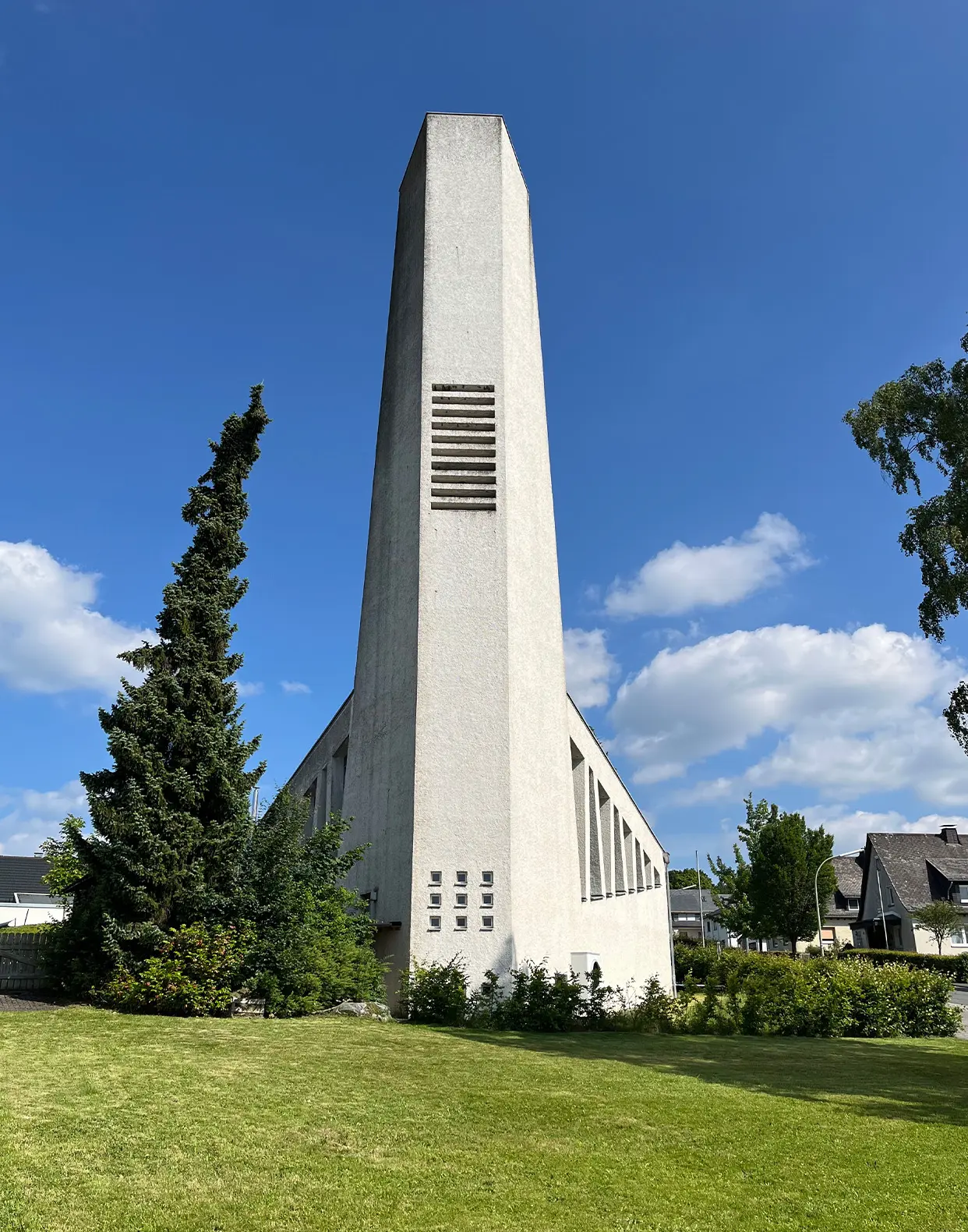
The church building, inaugurated in 1964, is a listed building and impresses with its unconventional design. Friedrich Wilhelm Kölsche (1922 to 2009), who designed numerous churches in Westphalia, was responsible for this urban accent, which was very modern at the time. The result is a reinforced concrete skeleton structure that stands out with its striking tower facing the valley, which has only a few sound slots. The column-free church interior is set on a trapezoidal floor plan that, like the gently sloping roof, rises towards the entrance area. The design language is reflected in the stained glass windows, which, thanks to their added arrangement, provide light for the room. Above the entrance portal is the organ loft, which rests on two filigree round supports and is accessed by a spiral staircase.
Construction method
Due to heritage protection regulations, the exterior walls were insulated from the inside. The new wall construction ensures that the building does not heat up in summer and that the heat stays where it belongs in winter. The sleeping cube was built as a house within a house using timber frame construction and stands independently in the room.
Materials
Untreated wood, wood fiber insulation, non-toxic paints and varnishes formed the basis for the energy-efficient renovation. The ecological building materials ensure a healthy indoor climate.
Energy
A hybrid system consisting of an air heat pump and gas condensing boiler, combined with underfloor heating, ensures comfort and well-being. Sustainable energy is provided by the photovoltaic system on the roof. In the evening, you can relax in front of the crackling fireplace.
Windows
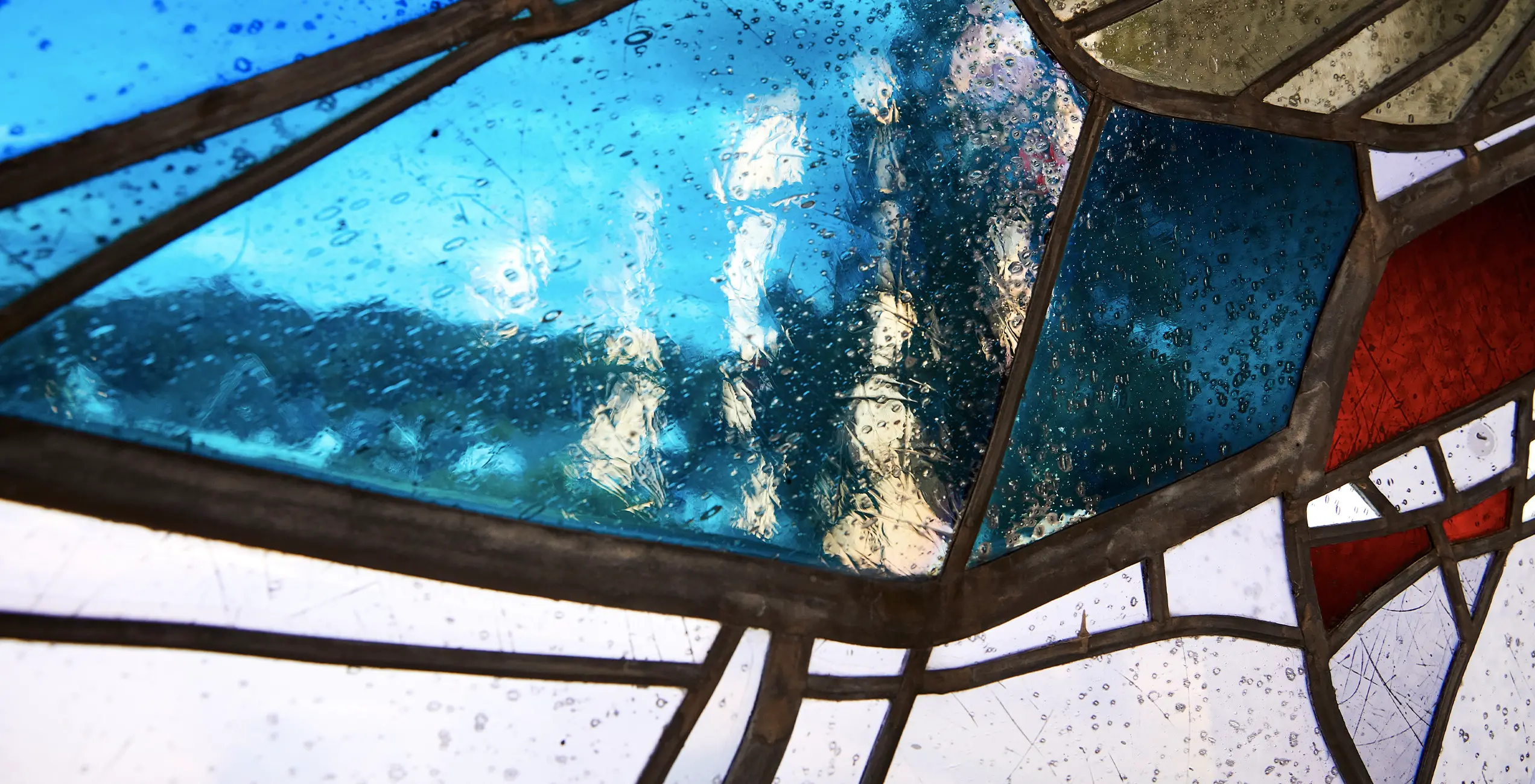
Based on a design by artist Rudolf Vombek (1930 to 2008), the windows depict the flow of water through the Sauerland mountains. They are inspired by a scene from the Gospel of John and are an extension of the hands of the figure of Christ that once hung on the front wall above the altar.
Entrance door
The double-winged aluminum door was created by artist Wolfgang Kreutter (1924 to 1989) and represents an invitation to the Last Supper. Other depictions illustrate the conflict between belief and non-belief.
Nature
Protected by a hornbeam hedge, a sun deck has been created in the outdoor area, followed by a flower meadow and lawn. The terrace is accessible without barriers.
Silence with history
The former Johanneskirche church bears witness to the population and settlement growth after the Second World War, as well as the increasing religious diversity of the population in the Sauerland region. Many refugees settled in the northern part of the city, causing the number of Protestant congregations to grow steadily. The church became a place of refuge and provided a sense of home for many refugees.
February 2016
Motivation
We wanted to put the ideas and experiences we had gained from our many travels and years of professional experience into practice in a very special and personal project. The church in our neighborhood was up for sale. “Let’s go and take a look,” was the sentence that started our project.
November 2018
Development
After the church was deconsecrated, a reduced number of services continued to be held. On November 11, the liturgical objects were finally carried out after the last service and the doors were closed.
August 2020
Concept
A church becomes a vacation home. The monument is transported into the present day through an energy-efficient renovation carried out almost entirely by the owners themselves, with ecological considerations in mind. The design is based on preserving the interior, which is made suitable for habitation only by additions such as a house within a house in the form of a sleeping cube.
December 2024
Done
The stained glass windows, designed with abstract elements, reflect a wonderful play of light on the walls, floors, and ceiling. Depending on the time of day and season, new shapes and color intensities are constantly emerging, inviting you to linger. On the gallery with a good book, in front of the fireplace with tea and a wool blanket, or while cooking together with family and friends.